As the nineteenth century progressed, many significant cultural, professional and social institutions were established and the best-supported of these were housed in buildings which reflected the particular institution`s importance and influence. A good early example is the Western Club (1839-42, D.& J. Hamilton) in Buchanan Street; later notable buildings include the Royal Faculty of Procurators` Hall (1854-6) in Nelson Mandela Place, the Merchants` House Buildings (1874) in George Square, the New Club (1877-9) in West George Street, The Athenaeum (1886), also in Nelson Mandela Place, and the Royal College of Physicians and Surgeons (1892-3) in St Vincent Street.
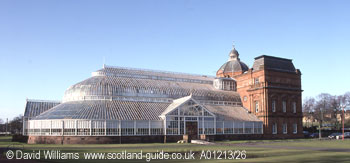
The growth of the West End encouraged the erection of important cultural buildings in that area such as the very grand St Andrew`s Halls (1873-7, James Sellars) and the Kelvingrove Art Gallery and Museum (1891-1901). The People`s Palace (see picture) (1893-8) was opened in the East End a few years later to provide some sort of geographical balance in the provision of `culture`.
This article is based on the guidebook "The Glasgow Guide".